Slots open for 2026! Get yours now by booking a FREE Discovery Call or connecting with me on WhatsApp, +63 991 227 0442
The Unsung Leader: What Norm MacLean Teaches Us About Modern Management
From Vault 33's biggest disappointment to Vault 31's unexpected leader. We analyze Norm MacLean’s journey in the Fallout TV series through the lens of leadership and corporate strategy.
Reg The VA
1/19/20265 min read
Disclaimer: We are halfway through Season 2 of the Fallout TV series by Amazon Prime so this post will contain spoilers - don't say I didn't warn you but I promise this will be worth it!
This post explores leadership lessons from pop culture. I'm bridging my love for games and management.
What Norm MacLean Teaches Us About Modern Management
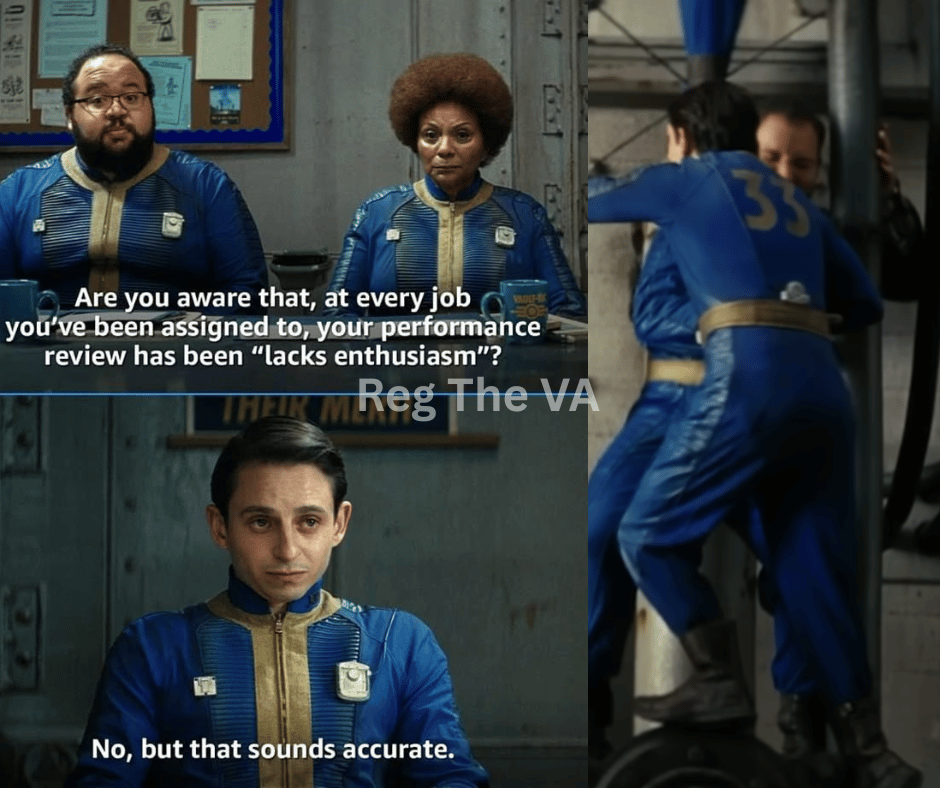
In the premiere of the Fallout TV series, Norm MacLean is presented as the quintessential "quiet" employee, unlike his older sister, Lucy MacLean, the Good Karma/High Luck character, and their father, Henry ''Hank'' MacLean, a successful Executive Assistant and the Overseer of Vault 33.
During a performance review, he is told that in every job he’s been assigned, the consensus is that he "lacks enthusiasm''. In the corporate world, this is often the "kiss of death", a label given to employees who don't fit the mold of the cheerful, obedient worker - but instead of making a fuss about it, Norm accepts it fully.
Fast forward to Season 2, and we see a different Norm. He isn't just participating;
he is literally climbing the corporate ladder: stepping over the cryopods of "Bud’s Buds" to uncover the truth and lead a group of thawed executives out of Vault 31.
What changed? And what can modern managers learn from the "black sheep" of Vault 33?
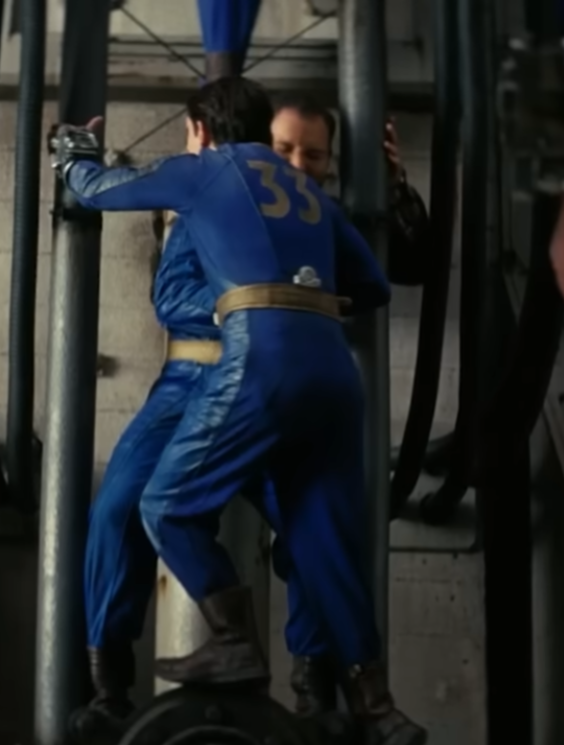
Norm MacLean climbing on the thawed out vault dwellers of Vault 31
The "Lacks Enthusiasm" Trap
In many corporate environments, "enthusiasm" is often measured by outward performance -smiling at meetings, volunteering for committees, and echoing company slogans.
Norm had none of that.
Although Norm was born and raised in Vault 33, he is not your typical vault dweller.
While Norm has his strengths, Norm preferred staying in the background, play Pip-Boy games, and tinker around computers.
Management Lesson: A lack of enthusiasm for mundane tasks is not the same as a lack of talent. Norm was disengaged because the "work" (vault life) was based on a lie.
When managers see a high-potential employee disengaging, they shouldn't just mark it as a "performance issue."
They should ask: Is the environment or the mission failing the employee?
Strategic Observation Over Loud Participation
While everyone else in Vault 33 was busy living the vault life, Norm was the only one observing the cracks in the system. He utilized Critical Thinking and Analytical Intelligence to realize that Vault 32's tragedy didn't add up.
Management Lesson: Modern leadership often overvalues extroversion and shuns introversion by also labeling it as being antisocial, but in reality, introverts often have energy on reserve, and the right vibes.
However, "Strategic Observers" like Norm are often the ones who identify risks before they become catastrophes. A good manager creates space for the quietest person in the room to speak, they usually have the best data.
Influence Without Authority
In Season 2, Norm finds himself in a position of "accidental leadership."
He thaws the junior executives of Vault 31 and has to navigate a room full of people who were literally bred to be "super-managers."
By pretending to be the new protege of "Bud Askins,"
Norm demonstrates Adaptive Leadership. He understands the culture of the people he is leading
(corporate sycophancy) and uses it to guide them toward his goal: escaping to the surface.
This starts Norm's new arc, the adapative leader. A major glowup from his Season 1 self.
This shift proves that true engagement comes from alignment. Norm didn't need a 'pep talk' or a better performance review; he needed a mission that actually mattered. Once the stakes were real, the 'unenthusiastic' worker became the most dangerous strategist in the room. Power doesn't always have to be loudly smiling back at you, sometimes, it's a set of observant eyes.
Climbing the Literal Corporate Ladder
The image of Norm climbing over the crypods and vault dwellers in Vault 31 is a powerful metaphor for Disruptive Innovation. To move forward, he had to physically and metaphorically "climb over" the old-guard management (Bud Askins and his frozen "Buds").
Norm’s trajectory proves that "enthusiasm" isn't about being loud; it’s about being right.
By the time he is literally climbing the corporate ladder in Vault 31 to thaw "Bud’s Buds," Norm has transitioned from a laid-back employee to a strategic operative.
Management Lesson: Real growth often requires bypassing traditional hierarchies. Norm didn't wait for a promotion to start his investigation. He took Initiative when the stakes were highest.

If you want a Norm MacLean character analysis, watch this video
Why We Need More "Norms"
Norm MacLean proves that the most valuable person in an organization isn't always the one with the best performance review. In fact, the very traits that made him a "poor" employee in a stagnant system: his skepticism, his quietness, and his refusal to blindly conform - are exactly what made him the only person capable of saving it.
In any company, it is easy to reward the "Yes People" (Yes Men), those who maintain the status quo and keep the gears turning without question. But when the "Operations" of a company become toxic or outdated, the "Yes People" are the ones who will follow the ship all the way to the bottom.
We need "Norms" because they care enough to look for the truth, even when it’s uncomfortable.
They are your natural Risk Managers. They don't just see the "Design" of the company; they see the flaws in the architecture that everyone else has learned to ignore.
Finding Your Own "Glow-Up"
Norm’s transformation from the "goofy, unenthusiastic" brother to the "Adaptive Leader" climbing the ladder in Vault 31 is a reminder that context is everything.
If you feel like a Norm - stuck in a role where your "performance review" doesn't reflect your potential, it might not be a lack of talent. It might be a lack of a worthy mission.
Like Norm, your greatest leadership assets might be waiting for the right moment to "thaw out."
In the end, a leader isn't defined by their title, but by their ability to navigate the truth.
Great Design and tight Ops are useless if they don't Support the truth-seekers.
Norm MacLean stopped waiting for a good performance review and started building his own arc. If you're tired of the 'vault life' in your own career, it's time to stop looking at the ladder and start climbing it.